Abhaneri Stepwell - How to Visit Chand Baori from Jaipur & Agra by Private Car
Hidden in a quiet village in eastern Rajasthan lies one of the most astonishing architectural wonders in India. While millions of travelers visit Jaipur, Agra, and the Golden Triangle every year, relatively few discover Chand Baori, an extraordinary stepwell located in the village of Abhaneri. Yet those who do often describe it as one of the most surprising and unforgettable places they encounter during their journey through North India.
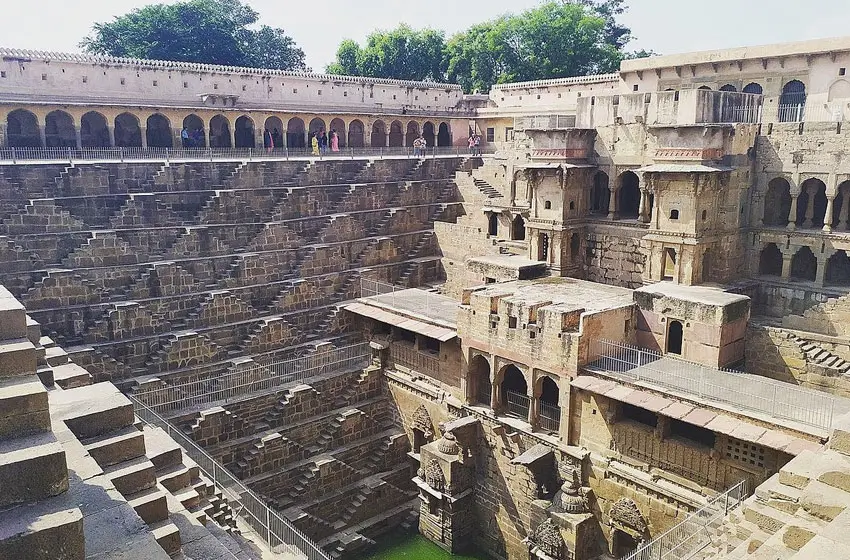
At first glance, Chand Baori appears almost unreal. Thousands of perfectly symmetrical stone steps descend deep into the earth, creating geometric patterns that seem more like an optical illusion than a practical structure. Viewed from above, the stepwell resembles a giant inverted pyramid carved with remarkable precision. Its scale, symmetry, and engineering sophistication leave visitors wondering how such a monument could remain relatively unknown compared to India's more famous landmarks.
A private car tour to Abhaneri is the most convenient way to explore this remarkable site. Located roughly halfway between Jaipur and Agra, Abhaneri serves as an ideal stop for travelers moving between these two iconic cities. Instead of spending an entire day on the road, visitors can transform the journey into a fascinating cultural experience by exploring one of India's greatest engineering achievements.
The village itself may appear modest, but its historical significance is immense. Chand Baori stands as a reminder of the ingenuity, creativity, and environmental awareness that characterized ancient Indian societies. Long before modern water systems existed, communities developed sophisticated methods for storing and managing water in challenging climates. Chand Baori represents one of the finest examples of this tradition.
The attraction also appeals to a wide variety of travelers. Architecture enthusiasts admire its geometric perfection. Historians appreciate its cultural significance. Photographers are drawn to its dramatic visual patterns. Casual visitors often find themselves captivated simply by the scale and beauty of the structure.
Unlike heavily crowded tourist attractions, Abhaneri generally offers a more relaxed experience. Visitors can spend time observing details, taking photographs, and appreciating the atmosphere without feeling rushed. The surrounding rural environment adds another dimension to the visit, providing insight into a quieter side of Rajasthan rarely encountered by international tourists.
For those seeking unique experiences beyond the standard Golden Triangle itinerary, a Chand Baori tour by private car offers one of the most rewarding cultural excursions in North India.
What Makes Chand Baori One of India's Greatest Architectural Wonders
The extraordinary reputation of Chand Baori is based on a combination of engineering brilliance, artistic beauty, and historical significance. Constructed more than a thousand years ago, the stepwell was designed primarily to collect and store water in a region where rainfall could be unpredictable and water resources were extremely valuable.
What distinguishes Chand Baori from other stepwells is its scale and symmetry. The structure extends approximately thirteen stories deep and contains thousands of narrow stone steps arranged in precise geometric patterns. These steps descend toward a central water reservoir, creating one of the most visually striking architectural compositions in India.
Standing at the edge of the stepwell and looking downward creates an almost hypnotic effect. The repetitive arrangement of steps forms intricate patterns that shift depending on the viewing angle and the changing light throughout the day. This visual complexity has made Chand Baori one of Rajasthan's most photographed monuments.
The engineering challenges involved in constructing such a structure were immense. Builders needed to create a stable, durable system capable of supporting significant weight while also managing water storage efficiently. The fact that the stepwell continues to stand after centuries of environmental exposure demonstrates the quality of its design and construction.
A Chand Baori sightseeing tour reveals how practical considerations and artistic ambitions merged within a single monument. Every element served a functional purpose, yet the overall result possesses remarkable aesthetic elegance.
The stepwell also reflects a broader cultural tradition found across parts of India where water structures became centers of social, religious, and economic life. People gathered at stepwells not only to collect water but also to interact, conduct business, and participate in community activities.
Today, visitors continue to marvel at the ingenuity of the builders who created this masterpiece long before modern construction technologies existed. The monument stands as a testament to human creativity and the importance of sustainable water management in historical societies.
For many travelers, Chand Baori becomes one of the most surprising discoveries of their Rajasthan journey because it demonstrates that some of India's greatest treasures remain hidden away from mainstream tourism routes.
Visit Chand Baori with a Comfortable Private Car
Discover the magnificent Chand Baori Stepwell at Abhaneri on a private car tour from Jaipur or Agra. Enjoy a comfortable ride with an experienced driver, flexible sightseeing, and a hassle-free travel experience.
The Fascinating History of Abhaneri Village
The village of Abhaneri possesses a history that extends far beyond the famous stepwell. During earlier periods, the settlement was an important regional center that benefited from trade, agriculture, and religious activity. Its location within eastern Rajasthan allowed it to serve surrounding communities while maintaining connections to larger political and economic networks.
Historians believe that Chand Baori was commissioned during the early medieval period when regional rulers invested in public infrastructure projects designed to support both practical needs and community development. Water management was particularly important in Rajasthan, where seasonal rainfall patterns required careful planning and conservation.
The name Abhaneri itself reflects the settlement's historical identity, and archaeological evidence suggests that the area once contained a much larger population than it does today. Temples, public structures, and water systems indicate that the village played a significant role within the surrounding region.
Over time, political changes, shifting trade routes, and evolving settlement patterns reduced the village's prominence. However, Chand Baori survived as a lasting reminder of its historical importance.
A heritage tour of Abhaneri provides opportunities to understand how communities adapted to environmental conditions while developing sophisticated systems for managing resources. The village serves as an example of how architecture, engineering, and social organization worked together to support sustainable living.
Unlike major urban heritage sites, Abhaneri retains a quiet and rural atmosphere that enhances the visitor experience. Exploring the area offers a glimpse into Rajasthan beyond its famous cities and allows travelers to appreciate a different dimension of the state's history.
The village's relative isolation has also helped preserve much of its character. Visitors often find the contrast between the monument's global significance and the simplicity of its surroundings particularly striking.
Understanding the history of Abhaneri adds depth to the experience of visiting Chand Baori and highlights the broader cultural context in which the stepwell was created.
Why Chand Baori Was Built – The Ancient Science of Water Conservation
To fully appreciate Chand Baori, it is important to understand the environmental challenges that inspired its construction. Rajasthan's climate has always required careful management of water resources. Periods of limited rainfall made efficient storage systems essential for survival.
The creators of Chand Baori developed a solution that combined practicality with remarkable engineering innovation. By excavating deep into the ground, they created a structure capable of storing substantial quantities of water while minimizing evaporation. The depth of the stepwell also helped maintain cooler temperatures, making it easier to access water during hot weather.
The thousands of steps served a practical purpose as well. As water levels rose and fell throughout the year, people could continue reaching the reservoir regardless of seasonal fluctuations. The design ensured accessibility even during periods of drought.
A stepwell tour in Rajasthan reveals how these structures represented far more than simple reservoirs. They functioned as gathering places where people met, exchanged information, conducted trade, and participated in community life. The architecture therefore needed to accommodate both practical and social functions.
The engineering principles demonstrated at Chand Baori continue to attract attention from architects, historians, and environmental researchers. Modern discussions regarding sustainable water management often reference historical systems such as stepwells because they illustrate effective approaches to resource conservation.
Visitors frequently leave with a new appreciation for the sophistication of ancient societies. The monument demonstrates that sustainability and environmental awareness were important concerns long before contemporary discussions about conservation emerged.
The enduring success of Chand Baori highlights the value of designing infrastructure that responds intelligently to local environmental conditions.
Harshat Mata Temple – The Forgotten Companion of Chand Baori
Many visitors focus entirely on the stepwell and overlook another important attraction located nearby: the Harshat Mata Temple. Although partially ruined, the temple remains a significant historical and architectural site that complements the experience of visiting Chand Baori.
Dedicated to Harshat Mata, a deity associated with happiness and prosperity, the temple once formed part of a larger religious complex that served local communities. The surviving structures contain intricate carvings and decorative elements that reflect the artistic traditions of the period.
Examining the temple reveals the skill of the craftsmen who worked in the region. Sculptures, architectural fragments, and ornamental details provide valuable insight into religious art and cultural practices during the early medieval era.
The relationship between the temple and the stepwell is particularly interesting. Together, they illustrate how practical infrastructure and spiritual life often existed side by side within historical settlements. Water, religion, and community activities were frequently interconnected.
A Chand Baori and Harshat Mata Temple tour offers a more complete understanding of Abhaneri's historical significance. The two sites complement one another and help visitors appreciate the broader cultural landscape in which the stepwell functioned.
The temple also provides additional opportunities for photography and exploration. While less visually dramatic than Chand Baori, it contributes important historical context and enriches the overall experience.
Travelers who take time to visit both sites often find that the combination creates a far more meaningful understanding of the village's heritage.
Traveling from Jaipur to Abhaneri by Private Car
One of the most popular ways to visit Chand Baori is as a day trip from Jaipur by private car. The journey is straightforward and comfortable, making it an ideal excursion for travelers seeking experiences beyond the Pink City's major attractions.
The drive typically takes around two to three hours depending on traffic and route conditions. Along the way, visitors pass through rural landscapes, small towns, agricultural areas, and traditional villages that provide insight into everyday life in Rajasthan.
Private transportation offers several important advantages. Travelers can depart according to their preferred schedule, stop at scenic locations, and spend as much time as desired at the monument. The flexibility allows for a more relaxed and personalized experience.
Many visitors choose to combine Abhaneri with other attractions located along the route. This approach transforms a simple excursion into a full day of cultural exploration.
A Jaipur to Chand Baori private tour is particularly popular among photographers and architecture enthusiasts who appreciate having sufficient time to explore the site thoroughly.
The comfort of air-conditioned transportation also enhances the experience, especially during warmer periods of the year.
For travelers based in Jaipur, Abhaneri represents one of the most rewarding and accessible heritage excursions available in Rajasthan.
Book Your Private Abhaneri Stepwell Day Trip Today
Explore one of India's most stunning ancient stepwells with a reliable private car and driver. Travel at your own pace while visiting Chand Baori and nearby attractions in complete comfort.
Visiting Chand Baori While Traveling Between Agra and Jaipur
Perhaps the most efficient way to experience Abhaneri is during a private transfer between Agra and Jaipur. Since the village lies near the route connecting these two cities, it serves as a natural stop that breaks up the journey while adding significant cultural value.
Rather than spending an entire day focused solely on transportation, travelers can transform the transfer into a sightseeing experience. The addition of Chand Baori creates a memorable highlight that many visitors ultimately rank among their favorite discoveries.
The route is particularly popular among travelers following the Golden Triangle itinerary. Incorporating Abhaneri allows them to explore a lesser-known destination while avoiding unnecessary detours.
Private transportation ensures that the stop can be timed conveniently without disrupting broader travel plans. The flexibility to arrive early, avoid crowds, and spend adequate time at the site contributes significantly to the quality of the experience.
A Golden Triangle tour with Chand Baori offers a more diverse perspective on North India's heritage by including an attraction that differs significantly from forts, palaces, and Mughal monuments.
For many travelers, the visit becomes a welcome surprise and one of the most distinctive experiences of their entire journey.
Why a Private Car Is the Best Way to Visit Abhaneri
A private car tour to Chand Baori offers the ideal combination of comfort, flexibility, and efficiency. Since Abhaneri is located in a rural area with limited transportation options, private vehicles provide the most convenient means of access.
Travelers can customize departure times, stop at additional attractions, and explore the site without feeling rushed. This flexibility is especially valuable for photographers and cultural travelers who often wish to spend extra time observing details and capturing images.
Experienced drivers frequently provide useful insights regarding routes, timing, and nearby attractions. Their local knowledge can enhance the overall quality of the excursion.
Families, couples, senior travelers, and independent explorers all benefit from the convenience of dedicated transportation. The ability to travel comfortably between Jaipur, Agra, and Abhaneri significantly improves the overall experience.
A thoughtfully planned Abhaneri sightseeing tour by private car ensures that visitors can fully appreciate one of India's most extraordinary architectural achievements while enjoying a relaxed and memorable journey through Rajasthan.