How India Trip Driver Plans Your Custom Itinerary - Behind the Scenes Process
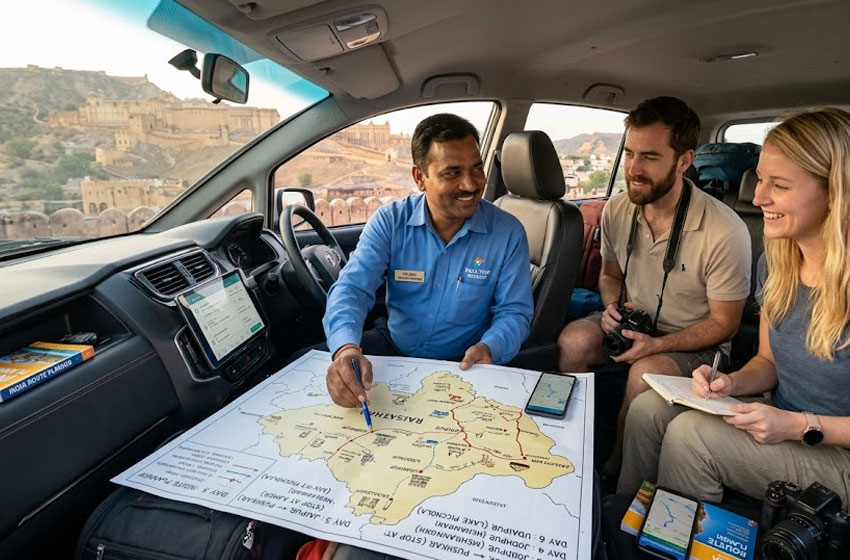
When travelers receive a completed itinerary from India Trip Driver, most of them see only the final result. They see a carefully organized travel plan containing destinations, hotels, sightseeing recommendations, driving routes, arrival details, and suggested experiences. The itinerary looks simple, logical, and effortless. Every day appears balanced, every route makes sense, and every destination seems to connect naturally with the next.
What most travelers never see is the enormous amount of planning that happens before that itinerary reaches their inbox.
Creating a successful custom India itinerary is not simply a matter of selecting famous destinations and connecting them with highways. India is one of the most geographically diverse, culturally complex, and logistically challenging travel destinations in the world. A journey that looks perfect on paper can quickly become exhausting if travel distances are miscalculated, hotel locations are poorly chosen, or sightseeing schedules fail to reflect real-world conditions.
At India Trip Driver, itinerary planning is treated as a process rather than a product. Every traveler arrives with different expectations, different interests, different comfort levels, and different travel styles. Some visitors want to focus on luxury and relaxation. Others are interested in history, architecture, photography, spirituality, wildlife, food, or local culture. Some travelers want to see famous landmarks while others want to avoid crowds and explore lesser-known regions.
The challenge is transforming those interests into a practical journey that works on the ground.
A successful private car tour in India should feel comfortable, flexible, and enjoyable. Travelers should spend their time creating memories rather than worrying about logistics. They should feel excited when they wake up in the morning, not exhausted by an overloaded schedule. They should have enough time to enjoy destinations properly while still covering the places that matter most to them.
This balance does not happen by accident.
Behind every itinerary lies a careful process involving route analysis, destination selection, travel pacing, accommodation research, local knowledge, seasonal considerations, and years of experience working with international travelers.
Many companies sell tours.
We design journeys.
Understanding the difference is the first step toward understanding how India Trip Driver plans every custom itinerary.
Every Great India Journey Begins with Understanding the Traveler, Not the Destination
One of the biggest misconceptions about travel planning is the belief that itinerary creation begins with destinations.
Most travelers contact us with a list of places they want to visit. They may already have a rough idea of their route. Common requests include Delhi, Agra, Jaipur, Udaipur, Jodhpur, Varanasi, Kerala, Goa, Amritsar, Ranthambore, and dozens of other destinations spread across the country.
Many travelers assume the next step is simply arranging transportation between those places.
In reality, that is not where itinerary planning begins.
The first step is understanding the traveler.
Two travelers can request exactly the same destinations and still require completely different itineraries. This is something many people do not realize until they begin discussing their trip in detail.
Consider a retired couple visiting India for the first time. Their priorities often include comfort, manageable travel days, quality accommodations, cultural experiences, and enough time to absorb each destination without feeling rushed. They may enjoy exploring historical sites, but they are rarely interested in rushing through five attractions in a single afternoon.
Now consider a honeymoon couple. They may prioritize luxury hotels, scenic drives, romantic experiences, sunset locations, photography opportunities, and memorable dining experiences. Their journey needs a completely different rhythm.
Families create another set of requirements. Children generally travel differently from adults. Parents often need flexibility, shorter sightseeing sessions, family-friendly hotels, and opportunities for relaxation between major attractions.
Photography enthusiasts represent yet another category. They frequently want sunrise access, sunset viewpoints, market visits during peak activity, and enough flexibility to adapt their schedule according to lighting conditions.
The destinations may remain identical.
The itinerary does not.
This is why we spend significant time discussing travel preferences before recommending routes or hotels. We want to understand what excites the traveler. We ask about previous trips, favorite experiences, accommodation expectations, activity levels, food interests, photography goals, and cultural preferences.
Many first-time visitors also arrive with concerns.
Some worry about transportation.
Some worry about distances.
Others worry about crowds, weather, safety, food, or communication.
Understanding these concerns helps us create itineraries that feel reassuring rather than overwhelming.
For example, a traveler nervous about long road journeys may benefit from shorter driving days and additional overnight stops. Someone concerned about crowds may be guided toward quieter destinations or different sightseeing times.
The more we understand the traveler, the more accurately we can shape the journey around their expectations.
This approach may take longer than simply offering a standard package, but it consistently produces better results.
Travelers do not remember itineraries because they were efficient.
They remember itineraries because they felt personal.
That personalization starts long before destinations are selected.
It starts with understanding the person who will be taking the journey.
Let Us Create Your Perfect Custom India Itinerary
Tell us your interests, travel style, preferred pace, and must-see destinations. Our experts will create a personalized India itinerary with carefully planned routes, hotels, sightseeing, and authentic local experiences.
Why We Never Start by Choosing the Most Famous Destinations
One of the most common mistakes travelers make when planning India is assuming that every famous destination belongs in their itinerary.
This usually happens after weeks of online research. Travelers read blogs, watch travel videos, browse social media, and create long wish lists containing every destination that looks interesting.
The result is often an itinerary that includes Delhi, Agra, Jaipur, Jodhpur, Udaipur, Jaisalmer, Varanasi, Kerala, Goa, Mumbai, and several additional locations within a limited timeframe.
On paper, it sounds exciting.
In reality, it often creates an exhausting travel experience.
One of the most important parts of our planning process involves helping travelers distinguish between a wish list and a realistic itinerary.
The goal of a successful journey is not to visit the highest number of destinations.
The goal is to create the highest quality travel experience.
These are very different objectives.
Many first-time visitors are surprised when we occasionally recommend removing destinations rather than adding them. They expect travel professionals to encourage more destinations because it creates a larger itinerary.
We take the opposite approach.
If a destination does not genuinely improve the journey, we are willing to leave it out.
Imagine a traveler with twelve days in India.
Technically, they could visit seven or eight destinations.
However, doing so would mean constant hotel changes, repeated packing and unpacking, additional travel days, and limited time in each location.
Instead of enjoying destinations, they would simply move through them.
A traveler who spends two nights in Udaipur often leaves with stronger memories than someone who rushes through the city in a few hours before moving on to the next destination.
Time matters.
Depth matters.
Travel rhythm matters.
Destination selection therefore becomes an exercise in balance.
We evaluate every location according to several factors.
Does it fit the traveler's interests?
Does it fit the season?
Does it fit the available timeframe?
Does it complement the other destinations?
Does it improve the overall flow of the journey?
Will the traveler genuinely enjoy spending time there?
These questions often lead to surprising recommendations.
Sometimes fewer destinations create significantly better itineraries.
A relaxed Rajasthan journey may provide a richer experience than a rushed multi-state itinerary.
A focused cultural route may outperform an overly ambitious nationwide tour.
Luxury travelers especially benefit from this approach because they often value quality over quantity. They want time to enjoy exceptional hotels, private experiences, scenic locations, and cultural interactions rather than constantly changing cities.
The same principle applies to families, photographers, and senior travelers.
The most memorable journeys are rarely the busiest.
They are the ones where travelers have enough time to fully experience the places they visit.
Destination planning therefore becomes less about famous locations and more about creating the right combination of places for a particular traveler.
That is the difference between selling a route and designing a journey.
How We Design Routes That Actually Work on Indian Roads Instead of Simply Looking Good on a Map
One of the biggest differences between a professionally planned India private car tour and a self-planned itinerary becomes obvious only after the journey begins. On a map, India often appears deceptively simple. Travelers open Google Maps, calculate distances between cities, and assume that travel times tell the whole story. In reality, designing routes across India requires much more than measuring kilometers between destinations.
At India Trip Driver, route planning is one of the most important parts of itinerary creation because the quality of a route directly affects the quality of the travel experience. A poorly designed route creates unnecessary fatigue, wasted time, and missed opportunities. A well-designed route creates comfort, flexibility, and memorable experiences that travelers often remember long after they return home.
When we evaluate routes, we do not focus solely on distance. We focus on how the journey will feel.
For example, two routes may show similar travel times on a map, yet offer completely different experiences on the ground. One route may pass through scenic countryside, traditional villages, historic landmarks, and excellent highways. The other may involve traffic congestion, industrial areas, road construction, and less enjoyable scenery. To a traveler, those differences are significant.
A journey from Delhi to Jaipur illustrates this perfectly. On paper, it is a simple transfer between two major cities. In reality, the route offers opportunities to experience rural North India, observe changing landscapes, stop for refreshments, and gradually transition from a modern capital city into the cultural heart of Rajasthan. Travelers often begin noticing differences in architecture, clothing, local traditions, and scenery long before they arrive in Jaipur itself.
The same principle applies throughout the country. A drive through Rajasthan is not simply transportation between forts and palaces. It is an opportunity to witness village life, desert landscapes, local markets, shepherd communities, and roadside scenes that reveal aspects of India rarely experienced by travelers who rely exclusively on flights.
When designing routes, we also look for opportunities to enrich travel days through meaningful stops. A journey between Jaipur and Agra, for instance, may include the remarkable Chand Baori stepwell in Abhaneri. A transfer through Kerala may include tea plantations, spice gardens, or scenic viewpoints. A drive through Karnataka may include heritage sites that many travelers would never discover on their own.
Another factor that influences route design is seasonal variation. Weather affects travel throughout India. Monsoon conditions, mountain roads, festival traffic, and regional events can all influence how routes perform at different times of the year. Because we continuously monitor real-world travel conditions, our planning process reflects realities that maps often fail to capture.
Route planning also helps us avoid common mistakes.
Many self-planned itineraries include unnecessary backtracking. Travelers visit destinations in an order that creates extra driving, repeated routes, or inefficient travel patterns. By reorganizing destinations strategically, we can often reduce travel time while improving the overall experience.
One of our goals is ensuring that travelers spend their energy enjoying destinations rather than recovering from transportation.
When guests tell us that the drives became one of their favorite parts of the journey, it is usually because the route was designed thoughtfully rather than simply efficiently.
The road itself becomes part of the experience.
That is one of the defining characteristics of a successful custom India itinerary.
The Secret Behind Comfortable Travel Days That Never Feel Exhausting
One of the least visible but most important aspects of itinerary planning is pacing.
Most travelers focus on destinations, attractions, hotels, and transportation. Very few people think about how the overall rhythm of a journey affects their experience. Yet travel rhythm is often the difference between a trip that feels exciting and one that feels exhausting.
At India Trip Driver, we spend a significant amount of time evaluating how travelers are likely to feel on each day of the journey.
This may sound unusual.
Most travel companies focus on what travelers will see.
We focus equally on how travelers will feel while seeing it.
India is an extraordinary destination, but it can also be intense. Large cities, vibrant markets, major monuments, cultural differences, climate changes, and long sightseeing days require energy. Even experienced travelers can become fatigued if itineraries are not balanced properly.
One of the most common mistakes in travel planning is assuming that every available hour should be filled with activity. Many first-time visitors arrive with ambitious lists of attractions and want to maximize every day.
The intention is understandable.
The outcome is often disappointing.
An itinerary packed with nonstop sightseeing may look impressive on paper, but it rarely produces the best travel experience. Visitors become tired, attractions begin to blend together, and the excitement of discovery gradually turns into exhaustion.
Our approach is different.
We deliberately create balance.
Some days focus heavily on sightseeing. Others emphasize scenic drives, cultural experiences, local interactions, or simply enjoying exceptional accommodations. This variation helps maintain enthusiasm throughout the journey.
Consider Rajasthan as an example.
A traveler might spend one day exploring the forts, palaces, and markets of Jaipur. The following day may involve a scenic drive toward Jodhpur with opportunities to experience rural landscapes and local culture. The pace naturally changes, allowing travelers to absorb what they have seen rather than constantly rushing toward the next attraction.
Luxury travelers particularly appreciate this approach.
Many guests staying in heritage palaces, lakefront hotels, wildlife lodges, or boutique properties want time to enjoy those places. They are not interested in spending every waking hour inside monuments. They want moments of relaxation, photography, dining, and reflection.
Families benefit from pacing as well.
Children rarely enjoy eight hours of sightseeing every day. Parents often appreciate itineraries that include flexibility, rest opportunities, and activities suitable for different age groups.
Senior travelers frequently prefer shorter driving days and manageable sightseeing schedules. Good pacing allows them to enjoy destinations comfortably without feeling overwhelmed.
We also consider emotional pacing.
Certain destinations naturally demand more energy than others. Delhi is exciting but intense. Varanasi is deeply fascinating but emotionally powerful. Major forts and palaces often involve extensive walking. Following these destinations with quieter experiences helps maintain balance.
The objective is simple.
Travelers should finish each day feeling satisfied rather than exhausted.
They should wake up looking forward to the next destination rather than needing a recovery day.
When travelers describe their journey as smooth, comfortable, and effortless, that feeling is usually the result of careful pacing rather than luck.
It is one of the most important elements of successful itinerary design.
Plan India Your Way with a Private Custom Tour
Skip the one-size-fits-all itinerary and travel at your own pace. Enjoy thoughtfully planned routes, comfortable driving days, handpicked stays, and experiences tailored specifically to you.
Selecting Hotels That Become Part of the Travel Experience
Many travelers assume that hotels serve one primary purpose: providing a comfortable place to sleep.
In reality, accommodations play a much larger role in shaping the quality of a journey.
At India Trip Driver, hotel selection is not treated as a separate task that happens after the itinerary is finished. Accommodation planning is integrated into the itinerary itself because the right hotel can significantly enhance a destination while the wrong hotel can diminish it.
When we recommend hotels, we are not simply comparing star ratings.
We are evaluating how each property contributes to the overall travel experience.
Location is one of the first factors we consider.
A beautiful hotel located far from major attractions may create unnecessary travel time every day. Conversely, a strategically located property can reduce transportation requirements and allow travelers to spend more time enjoying the destination itself.
However, location is only part of the equation.
The character of the hotel matters as well.
In Rajasthan, for example, many travelers dream of staying in restored palaces, historic havelis, and heritage mansions. These properties provide more than accommodation. They create an opportunity to experience aspects of royal history and traditional architecture that cannot be replicated by modern hotels.
A night in a carefully restored palace often becomes one of the highlights of the entire journey.
In Kerala, accommodation decisions may focus on backwater settings, plantation estates, or beachfront locations. In wildlife destinations, proximity to safari zones and natural surroundings often take priority. In cities such as Delhi or Mumbai, convenience and service quality may become more important.
Traveler preferences also influence recommendations.
Some guests prioritize luxury and international standards.
Others prefer boutique properties with local character.
Some travelers seek architectural charm while others focus on comfort, wellness facilities, or exceptional dining.
We carefully match hotels to traveler expectations.
Another factor we consider is how accommodations fit within the rhythm of the itinerary. After a demanding sightseeing day, a peaceful hotel may be more valuable than a highly active property. After several nights in historic accommodations, travelers may appreciate a contemporary luxury hotel with modern amenities.
Every decision contributes to the overall balance of the journey.
We also evaluate consistency.
A property may look beautiful in photographs but fail to deliver reliable service. Years of experience and guest feedback help us identify hotels that consistently meet expectations.
The objective is not simply finding the highest-rated hotel.
The objective is finding the right hotel for that particular traveler, within that particular destination, at that particular stage of the journey.
When accommodations align perfectly with the itinerary, travelers stop thinking of hotels as places to sleep.
They become part of the experience itself.
And that is exactly what we aim to achieve.
Building Local Experiences Beyond Tourist Attractions
Most travelers arrive in India with a list of famous places they want to see. The Taj Mahal, Amber Fort, City Palace Udaipur, Mehrangarh Fort, Varanasi Ghats, Mysore Palace, Golden Temple, Kerala Backwaters, and countless other landmarks naturally attract attention. These places deserve their reputation and often become highlights of a journey.
However, one of the most interesting patterns we have noticed over the years is that travelers frequently return home talking about experiences that were never part of their original wish list.
They remember a conversation with a local artisan in Rajasthan.
They remember drinking tea beside a rural road while watching village life unfold around them.
They remember a small market that was not mentioned in any guidebook.
They remember watching the sun set over a lake while local families gathered nearby.
They remember the sounds of a temple ceremony, the aroma of spices in a traditional market, or the smile of a craftsman explaining techniques passed down through generations.
These moments rarely appear on the front page of travel brochures.
Yet they often become the most meaningful memories of the entire trip.
This understanding plays a major role in how we design a custom India tour itinerary.
At India Trip Driver, we believe a successful journey should include more than monuments and sightseeing. Famous attractions provide context and history, but local experiences provide connection. They help travelers move beyond observation and begin interacting with the destination in a more personal way.
When planning itineraries, we actively look for opportunities to include experiences that reveal everyday life. These experiences vary according to the region and the interests of the traveler.
In Rajasthan, this may involve visiting traditional villages where artisans continue producing textiles, pottery, leather goods, or handwoven products using techniques that have existed for generations. Travelers often enjoy seeing the process itself rather than simply shopping for finished products.
In Kerala, local experiences may include spice plantations, fishing communities, traditional cooking experiences, or interactions with families living along the backwaters. These moments provide insight into daily life that cannot be gained from sightseeing alone.
In Varanasi, local experiences often happen naturally. Early morning walks through narrow lanes, conversations with boatmen, observing rituals along the ghats, and watching daily life unfold beside the river create a much deeper understanding of the city than any monument visit could provide.
Even in major cities, meaningful local experiences exist beyond famous attractions. Traditional food markets, neighborhood cafés, artisan workshops, cultural performances, and local festivals often become highlights for travelers seeking authentic connections.
The advantage of a private driver tour in India is flexibility. Unlike large group tours that must follow strict schedules, private travel allows room for spontaneous discoveries. If something interesting appears along the route, there is often time to stop and explore.
Some of the most memorable experiences happen unexpectedly.
A wedding procession.
A local celebration.
A traditional music performance.
A village market.
A scenic viewpoint that was never included in the original itinerary.
These moments create stories that travelers continue sharing long after they return home.
Our goal is not simply to help travelers see India.
It is to help them experience India.
That distinction influences every itinerary we create.
How Driver Knowledge Influences Every Itinerary We Design
Most travelers naturally focus on destinations, hotels, and attractions when planning a trip.
Very few people think about how much influence a professional driver can have on the quality of a journey.
At India Trip Driver, drivers are not simply transportation providers. Their experience plays an important role in how itineraries are designed and refined. Years of practical knowledge gained from traveling across different regions of India provide insights that maps, websites, and travel guides simply cannot offer.
When planning a private car tour in India, local knowledge matters.
Road conditions change.
Traffic patterns evolve.
New highways open.
Construction projects affect travel times.
Seasonal weather influences routes.
Festivals impact local activity.
Understanding these realities requires continuous on-the-ground experience.
Drivers often provide valuable feedback regarding travel conditions between destinations. They know which routes offer better scenery, smoother roads, cleaner rest facilities, and more enjoyable travel experiences. These insights help us design itineraries that feel comfortable rather than stressful.
For example, two routes between the same cities may appear nearly identical on a map. However, one route may provide significantly better scenery, safer driving conditions, and more interesting stops along the way. These differences become obvious only through experience.
Driver knowledge also helps us understand realistic travel times.
One of the most common mistakes made by self-planned itineraries is underestimating how long things actually take. Travelers often rely on theoretical driving times without considering traffic, sightseeing stops, road conditions, or rest breaks.
Experienced drivers understand how journeys unfold in real life.
They know when early departures are beneficial.
They know which routes become congested during certain hours.
They know where travelers typically enjoy stopping.
They know which stretches of road feel longer than they appear.
This practical knowledge directly improves itinerary quality.
Drivers also contribute to local experiences.
Many have spent years working with international visitors and understand the questions travelers commonly ask. They often recommend local restaurants, scenic viewpoints, photography locations, markets, and cultural experiences that may not appear in standard guidebooks.
For travelers, these recommendations often become unexpected highlights.
Another important factor is safety and comfort.
Long-distance travel becomes significantly easier when routes are planned by people who understand road conditions and regional differences. Travelers can relax and enjoy the journey instead of worrying about navigation or logistics.
Many guests initially view the driver as someone who operates the vehicle.
By the end of the trip, they often view the driver as one of the most valuable parts of the experience.
That relationship begins long before the traveler arrives.
It starts during the itinerary planning process itself.
Final Testing Before an Itinerary Is Sent to a Traveler
Once destinations have been selected, routes have been designed, hotels have been researched, and experiences have been incorporated, the itinerary still is not finished.
Before any custom India travel itinerary is finalized, it goes through a detailed review process.
This stage is often invisible to travelers, but it plays a major role in ensuring that the final journey feels smooth and enjoyable.
At this point, we examine the itinerary day by day.
We review driving times.
We evaluate sightseeing schedules.
We examine hotel locations.
We check arrival and departure logistics.
We look for potential problems before they ever affect the traveler.
One of the key questions we ask is whether the itinerary feels balanced.
An itinerary can be technically correct while still being poorly paced. It may include too much sightseeing on one day and too little on another. It may involve unnecessary travel. It may contain opportunities to improve efficiency or comfort.
This review process allows us to identify and correct those issues.
We also examine practical details that many travelers never consider.
Are major attractions open on the intended day?
Are sightseeing times realistic?
Will travelers reach important locations during the best part of the day?
Does the route create unnecessary backtracking?
Could a different hotel improve the experience?
Would an additional overnight stop reduce fatigue?
These questions often lead to adjustments.
Sometimes a destination receives more time.
Sometimes a route is reorganized.
Sometimes accommodations are changed.
Sometimes an entirely different sequence of destinations creates a better result.
The objective is simple.
The itinerary should feel natural.
Travelers should never feel as though they are fighting against the schedule.
They should move comfortably from one destination to the next.
Every day should build naturally upon the previous one.
When guests tell us that their trip felt effortless despite covering large distances across India, it is often because of this review process.
Many potential problems were identified and solved before the journey even began.
A successful itinerary is not simply planned.
It is refined.
That refinement is one of the most important parts of the process.
Why No Two India Trip Driver Itineraries Are Ever Exactly the Same
One of the core principles behind our approach is personalization.
Every traveler is different.
As a result, every itinerary should be different as well.
This philosophy may sound obvious, yet much of the travel industry still relies on standardized packages designed for the average traveler.
The problem is that the average traveler does not exist.
Every guest arrives with unique interests, expectations, priorities, and travel styles.
A luxury honeymoon couple traveling through Rajasthan requires a completely different journey than a retired couple interested in history.
A wildlife photographer requires different timing than a family traveling with children.
A first-time visitor may want iconic landmarks.
A returning visitor may want hidden destinations and local experiences.
Even when travelers visit the same cities, the details of their itineraries often differ significantly.
Hotel choices change.
Sightseeing priorities change.
Driving schedules change.
Experiences change.
The overall pace changes.
This is why no two India private tour itineraries are ever exactly alike.
We do not begin with a template and force travelers into it.
Instead, we begin with the traveler and build the journey around them.
This approach requires more planning.
It requires more communication.
It requires a deeper understanding of destinations and travel styles.
However, it consistently produces better results.
Travelers feel understood.
Destinations feel relevant.
Experiences feel meaningful.
The journey feels personal.
Ultimately, that is the purpose of a custom itinerary.
Not simply to move travelers through India.
But to create a journey that reflects their interests, their pace, and their vision of travel.
When that happens successfully, the itinerary becomes more than a schedule.
It becomes a travel experience designed specifically for the person taking it.