Unknown & Hidden Facts About the Taj Mahal – Stories No One Tells You

Hidden Facts About the Taj Mahal That Most Tourists Don't Know
The Taj Mahal is one of the world’s most admired monuments, yet very few people truly understand the mysteries, legends, hidden structures, and secret details behind its creation. Its beauty is visible, but its deeper stories lie quietly within its marble walls, symmetrical gardens, closed chambers, and historical records. Every stone, every carving, and every architectural decision carries meaning that reveals why this monument remains one of humanity’s greatest creations. Beyond its iconic form, the Taj Mahal is a world of secrets - some historical, some architectural, and some wrapped in centuries-old legends.
Travellers usually admire the Taj Mahal for its visible beauty, but the monument becomes far more remarkable when its hidden layers unfold. These layers include sealed rooms, engineering innovations, cultural symbolism, rare astronomical alignments, colour-shifting marble effects, and lesser-known stories from the Mughal era. Understanding these secrets deepens the connection with the monument and allows travellers to appreciate the extraordinary brilliance that went into its creation.
This guide reveals the unknown and hidden facts about the Taj Mahal, written in a way that foreign travellers can understand clearly and enjoy fully. Each section uncovers a rare detail that adds depth, surprise, and admiration to this legendary masterpiece.
Behind the White Marble Lies a Story Few Travelers Know
Beyond its perfect symmetry and world-famous beauty, the Taj Mahal hides fascinating details, unanswered mysteries, and extraordinary architectural brilliance.
Why the Taj Mahal Continues to Fascinate the World
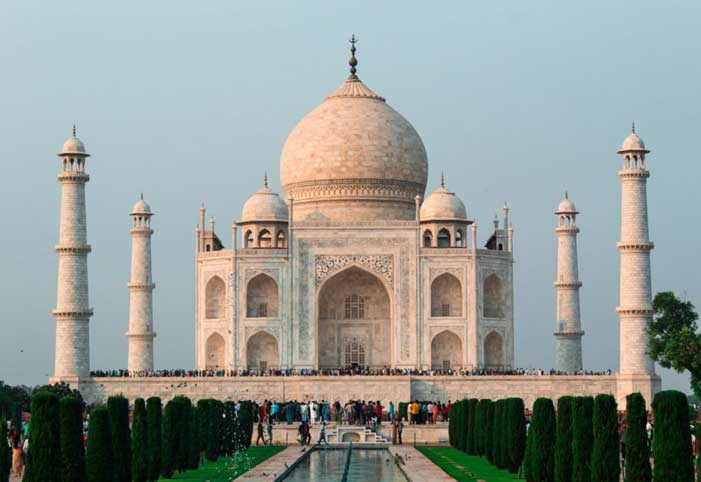
The Taj Mahal is far more than a magnificent white marble monument - it is a timeless symbol of love, architectural brilliance, and the rich cultural heritage of the Mughal Empire. While millions of visitors admire its breathtaking beauty every year, the monument's true fascination lies in the remarkable stories, engineering innovations, and historical mysteries hidden beneath its elegant appearance.
From its perfectly symmetrical design and intricate marble inlay work to its sealed chambers, optical illusions, and centuries-old legends, every part of the Taj Mahal reflects extraordinary craftsmanship and careful planning. Built in the 17th century by Emperor Shah Jahan in memory of his beloved wife Mumtaz Mahal, the monument continues to captivate historians, architects, photographers, and travellers from around the world.
Beyond its romantic reputation, the Taj Mahal showcases advanced engineering techniques that were centuries ahead of their time. Its earthquake-resistant minarets, sophisticated water management system, precision calligraphy, and colour-changing marble demonstrate the exceptional knowledge and artistic vision of the Mughal artisans. Every visit reveals new details that many tourists overlook, making each experience unique and memorable.
Today, as a UNESCO World Heritage Site and one of the New Seven Wonders of the World, the Taj Mahal remains India's most iconic landmark. Whether you are interested in history, architecture, photography, or cultural exploration, understanding the hidden stories behind this masterpiece allows you to appreciate why it continues to inspire admiration across generations and remains one of the greatest architectural achievements in human history.
Who Designed the Taj Mahal? The Architects Behind the Masterpiece
While Emperor Shah Jahan commissioned the Taj Mahal in memory of his beloved wife Mumtaz Mahal, the monument was brought to life by some of the finest architects, engineers, calligraphers, and craftsmen of the Mughal Empire. Historical records widely credit Ustad Ahmad Lahori as the principal architect, although the project involved experts from Persia, Central Asia, India, and the Ottoman world.
Construction began in 1632 and continued for approximately 22 years, with the mausoleum largely completed by 1648 and the surrounding complex finished a few years later. More than 20,000 skilled artisans and around 1,000 elephants were involved in transporting marble and precious stones from different regions.
The white marble came from Makrana in Rajasthan, while gemstones such as jade, turquoise, lapis lazuli, jasper, crystal and onyx were imported from various parts of Asia. Every detail - from the floral inlay work to the calligraphy - demonstrates the remarkable collaboration of master craftsmen.
Understanding who built the Taj Mahal helps visitors appreciate that it is not only a symbol of love but also one of the greatest achievements in architecture and engineering.
The Changing Colours of the Taj Mahal
One of the most mesmerising characteristics of the Taj Mahal is the way its marble changes colour throughout the day. This is not simply a natural effect - it is a deliberate architectural feature. The marble used in the Taj Mahal contains reflective crystals that react to sunlight, moonlight, and atmospheric moisture. During sunrise, the monument appears soft and pinkish. As the sun rises, the structure turns brighter and whiter, while evening shades create a golden hue. Under moonlight, the Taj Mahal appears almost translucent and faintly bluish.
This subtle colour shift symbolises the emotional phases of life and love. The architect intentionally selected marble that carries these reflective properties, turning the Taj Mahal into a structure that appears alive and constantly evolving. Travelling early morning or during full moon nights reveals this effect at its most magical form.
The Hidden Chambers Beneath the Taj Mahal
One of the most intriguing mysteries of the Taj Mahal lies beneath the main structure. There are several sealed rooms and corridors located in the substructure. These hidden chambers are not accessible to the public, and their exact purpose remains a subject of debate. Some historians believe they were used to support the main platform, while others suggest they were meant for ventilation or structural reinforcement.
There are also theories suggesting that the chambers contain unfinished marble work, storage areas for artefacts, or cooling systems that maintain the proper temperature inside the mausoleum. The presence of these sealed rooms adds an element of mystery to the monument, leaving visitors fascinated by the idea of architectural brilliance hidden beneath the visible surface.
Best Photography Spots Around the Taj Mahal
Many visitors only photograph the monument from the main entrance, but several locations offer spectacular views.
- Mehtab Bagh
- Main Entrance Gate
- Yamuna River Viewpoint
- Diana Bench
- Taj Nature Walk
- Mosque Side Platform
Things Most Visitors Miss During Their Visit
Many tourists spend only a few hours at the Taj Mahal and unknowingly miss several remarkable experiences nearby.
- Visit Mehtab Bagh for stunning sunset views across the Yamuna River.
- Explore the Taj Museum to learn about the monument's construction and original drawings.
- Observe the intricate marble inlay work up close instead of viewing only the overall structure.
- Visit the mosque and the Jawab building to understand the complex's perfect symmetry.
- Arrive early in the morning to enjoy fewer crowds and softer light for photography.
- If your visit coincides with a full moon, consider booking a night viewing session for a completely different perspective.
These experiences help visitors discover a side of the Taj Mahal that many travellers overlook.
Perfect Symmetry With One Emotional Exception
The Taj Mahal is admired for its flawless symmetry - however, there is one deliberate exception designed for emotional and cultural reasons. The cenotaph of Mumtaz Mahal lies perfectly in the centre of the inner chamber, but the cenotaph of Shah Jahan is slightly off-centre. This is the only asymmetrical feature inside the monument.
The reason is meaningful. The entire structure was originally designed solely for Mumtaz Mahal. Shah Jahan was not intended to be buried here. After he was imprisoned by his son Aurangzeb, his final resting place was added beside Mumtaz, breaking the monument’s perfect symmetry. This single asymmetry symbolises the emotional disruption in Shah Jahan's life.
Optical Illusions Designed for Impact
The architects of the Taj Mahal used a series of optical illusions to enhance its beauty. One such illusion is visible right at the entrance gate. As travellers walk closer to the monument, the Taj appears to shrink rather than grow larger. This effect was created by manipulating the perspective of the gateway, creating a surprising and unforgettable first impression.
Another illusion is the appearance of the pillars surrounding the main dome. They seem perfectly upright, but they actually tilt slightly outward. This subtle tilt protects the structure from earthquakes - if the pillars were ever to fall, they would collapse away from the main dome instead of falling inward.
These illusions display the advanced mathematical and architectural knowledge of the Mughal era, showing that the Taj Mahal is not just art but a work of scientific genius.
A Masterpiece Built Without Cement
The Taj Mahal was constructed using interlocking marble blocks rather than modern cement. The stones were fitted together like a puzzle, and natural adhesives such as fruit extracts, lime mortar, plant-based gums, jaggery compounds, and resin blends were used to bind them. This technique makes the structure exceptionally strong and capable of withstanding centuries of weather changes.
The marble slabs also contain hidden metal joints, clamps, and dowels that keep them connected without visible seams. This blend of artistry and engineering has allowed the Taj Mahal to survive storms, earthquakes, and centuries of environmental shifts.
The River Behind the Taj Mahal Was Part of the Design
The Yamuna river flowing behind the Taj Mahal is not an accidental feature - it is a core part of the monument’s design. Shah Jahan wanted the mausoleum to be reflected in the calm waters of the river, symbolising eternity and the duality of life. The placement of the monument along the riverbank helps maintain humidity levels, keeping the marble cool and preventing cracks.
Additionally, the river ensured the availability of water for the vast gardens, fountains, and cooling systems. The gardens were designed as a representation of paradise, and the presence of the river enhances this spiritual symbolism.
The Taj Mahal Was Originally Designed to Include a Black Twin
One of the most famous legends surrounding the Taj Mahal suggests that Shah Jahan planned to build a black marble mausoleum exactly opposite the Taj Mahal, across the river. This structure was meant to be his own resting place, mirroring the white Taj Mahal in dark stone.
While historians debate the accuracy of this story, the remains of a foundation-like structure exist on the opposite riverbank at a place known as Mehtab Bagh. Some believe these foundations were meant for the black Taj Mahal, while others think they were part of a garden layout. Regardless of the truth, this legend continues to fascinate travellers.
Common Myths About the Taj Mahal
The Taj Mahal has inspired countless stories over the centuries. While some are based on historical evidence, others remain popular legends without reliable proof.
Was a Black Taj Mahal Really Planned?
The famous story of a black marble Taj Mahal across the Yamuna River has never been confirmed by archaeological evidence. Most historians believe it is a fascinating legend rather than a historical fact.
Were the Craftsmen's Hands Cut Off?
There is no credible historical record proving that Shah Jahan ordered the hands of the craftsmen to be cut off after construction. Most experts consider this to be a popular myth.
Are the Hidden Chambers Secret Palaces?
The sealed rooms beneath the Taj Mahal are generally believed to serve structural and maintenance purposes rather than hiding secret treasures or underground palaces.
Understanding the difference between history and legend helps visitors appreciate the monument based on verified facts instead of popular misconceptions.
The Marble Responds to Temperature
The marble of the Taj Mahal expands and contracts with temperature changes. During hot afternoons, the marble expands slightly, and during late evenings, it contracts. This natural movement prevents cracks and damage, allowing the monument to remain stable for centuries.
This temperature-based flexibility of marble is one reason the Taj Mahal still stands strong despite the intense summers of northern India. The engineers of that era understood the behaviour of natural stone and used it to their advantage.
Rare Facts Most Tour Guides Never Mention
Even visitors who hire local guides often leave without hearing some of the Taj Mahal's most fascinating details. These lesser-known facts reveal the extraordinary planning and craftsmanship behind the monument.
- The original graves of Shah Jahan and Mumtaz Mahal are located in a lower chamber beneath the decorative cenotaphs that visitors see today.
- The marble screens surrounding the cenotaphs were carved from single slabs of marble using remarkable precision.
- More than 25 varieties of semi-precious stones were used in the intricate floral inlay work.
- The Taj Mahal has no artificial lighting inside the main mausoleum, allowing natural light to enhance the marble's beauty.
- The central dome creates a unique echo effect, allowing sounds to resonate for several seconds.
- Every decorative flower carved into the marble features a slightly different design, ensuring that no two patterns are exactly alike.
- Craftsmen used traditional pietra dura techniques that continue to impress modern architects and conservation experts.
These remarkable details make every visit more meaningful and reveal why the Taj Mahal remains one of the world's finest architectural masterpieces.
The Calligraphy Gets Bigger as It Goes Up
The beautiful black inlay calligraphy seen at the main entrance is not uniform in size. The letters gradually increase in height as they go up the arch. This intentional design makes the text appear perfectly uniform when viewed from the ground - a rare example of artistic imagination blended with scientific precision.
The calligraphy includes verses from the Quran, crafted with stones such as onyx and jade. The larger upper letters ensure that the visual proportion remains consistent, making the monument appear balanced from any distance.
You've Seen the Taj Mahal. But Do You Know Its Secrets?
The marble masterpiece holds far more than timeless beauty. Hidden chambers, remarkable optical illusions, architectural secrets, and centuries-old stories reveal a side of the Taj Mahal most visitors never discover.
The Taj Mahal Has Withstood Multiple Natural Disasters
Over the centuries, the Taj Mahal has survived major floods, earthquakes, weather shifts, storms, and even attempts of destruction during wars. Its foundation lies on a complex system of wells, arches, and wooden supports designed to absorb shock and movement. This engineering brilliance has allowed the monument to remain stable through time.
The outward-leaning minarets also act as a protective shield. During an earthquake, the minarets would fall outward, away from the main dome, preserving the central chamber.
The Taj Mahal Was Once Covered to Hide It from Enemies
During World War II and later during the Indo-Pak conflicts, the Taj Mahal was covered with bamboo scaffolding and camouflage netting to protect it from potential air attacks. The idea was to disguise the monument so that enemy pilots could not identify it easily from the air.
While the scaffolding made the Taj Mahal look unusual, it successfully protected it during times of uncertainty. Most travellers are unaware that this global icon was once hidden from view to keep it safe.
The Perfect Garden Was Designed as a Symbol of Paradise
The original garden layout of the Taj Mahal represents the Islamic concept of paradise. The fountains, pathways, water channels, flowerbeds, and trees were arranged according to the Charbagh style - a quadrilateral garden divided into four symbolic sections. Each section represents rivers of milk, honey, water, and wine described in ancient scriptures.
The garden was meant to provide a sense of spiritual peace, symbolising the soul’s journey toward eternal rest. Walking through the garden today still evokes a sense of quietness and balance.
The Marble Carvings Are Deeper Than They Appear
Many travellers admire the floral carvings on the marble panels without realising that these carvings are extremely deep and designed to withstand erosion. Stones such as jasper, lapis lazuli, jade, turquoise, and sapphire were inlaid into the marble using a technique called pietra dura, one of the world’s most sophisticated artistic styles.
These inlays are not painted - they are stones placed into marble like a mosaic. Even after centuries of weather exposure, the designs remain vibrant and strong due to the precision of the craftsmanship.
Interesting Numbers Behind the Taj Mahal
|
Detail |
Information |
| Construction Started | 1632 |
| Construction Completed | Around 1653 |
| Construction Period | Approximately 22 Years |
| Workers Involved | Around 20,000 |
| Elephants Used | Around 1,000 |
| Marble Source | Makrana, Rajasthan |
| UNESCO Status | Since 1983 |
| Height of Main Dome | About 73 metres |
| Wonder of the World | New Seven Wonders (2007) |
These numbers highlight the incredible scale, planning and craftsmanship that went into creating one of the world's most celebrated monuments.